
Introduction
If you’ve ever felt overwhelmed by a project that seemed to take on a life of its own, you’re not alone. In my 20+ years managing projects—from small IT rollouts to large-scale enterprise transformations—I’ve learned that the basics are what make or break a project. Fancy tools and frameworks can help, but without clarity on fundamentals, teams spin in circles.
According to PMI, organizations waste an average of $97 million per $1 billion invested due to poor project performance.
This guide is my attempt to simplify project management basics into a practical roadmap you can actually use, whether you’re a beginner, an accidental project manager, or just trying to bring order to the chaos.
What Is Project Management?
At its core, project management is about delivering something new, valuable, and time-bound without blowing up your budget or your team’s sanity.
A project is temporary (it has a start and end), unique (it creates something that didn’t exist before), and bound by constraints (time, cost, scope, quality).
Why it matters: Without project management, deadlines slip, budgets explode, and “accountability” becomes a blame game. With it, you get visibility, predictability, and confidence in delivery.
Actionable tip: Next time you kick off work, ask yourself: “Is this ongoing operations, or is this a project?” If it has a clear end date, produces a unique outcome, and requires coordination across people or teams, treat it as a project. Once you label it correctly, you can apply project management basics—like defining scope, assigning roles, and tracking progress—so it doesn’t drift aimlessly.
Core Principles You’ll Use on Every Project
Every project looks different, but the same core principles show up again and again. Think of these as the “rules of the road” that keep you from drifting off course.
Scope clarity
If you don’t define what’s in and out, you’ll fight scope creep forever. Write down what success looks like in one sentence. Then break it into deliverables and acceptance criteria.
Pro tip: Start with a simple checklist of “in scope” and “out of scope.” It will save you endless debates later.
Time & schedule
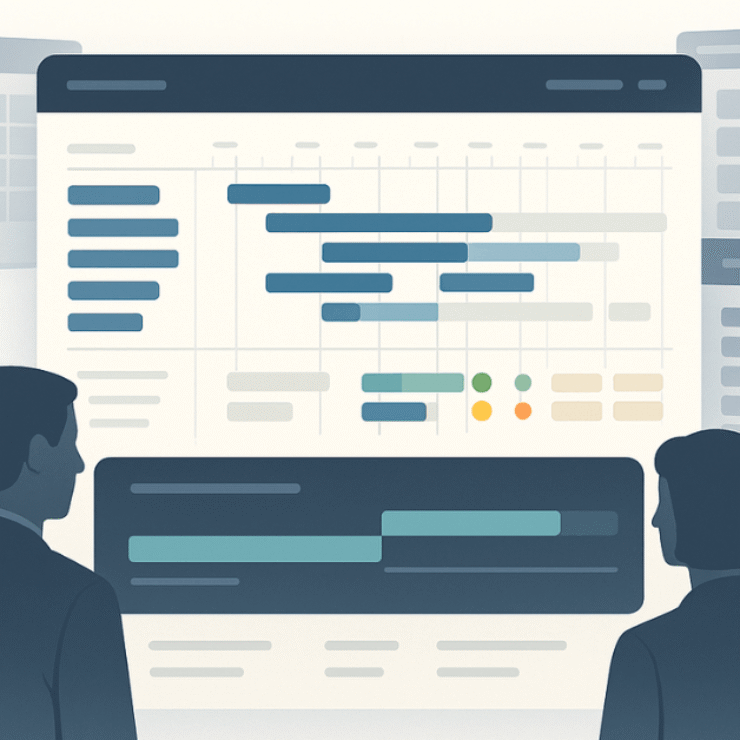
A calendar with due dates is not a project schedule. You need milestones, dependencies, and a sense of critical path. Even a lightweight Gantt chart helps you see if delays in one task will derail the whole project.
Pro tip: Identify your “must-hit” milestones and protect them like gold.
Cost & resources
Every project consumes money, people, or both. Be realistic—if you only have a five-person team, you can’t plan a 10-week job in 2 weeks.
Pro tip: Budget not just for direct costs (licenses, materials) but also for hidden costs like overtime or support work.
Quality
Decide upfront what “good enough” looks like. Otherwise, you’ll face endless tweaks and rework.
Pro tip: Define a “definition of done” for each deliverable so everyone agrees when work is finished.
Risk
Projects rarely fail overnight—it’s usually a small risk that snowballs. List your top 5 risks early, track them weekly, and update the plan.
Pro tip: A simple RAID log (Risks, Assumptions, Issues, Dependencies) in Excel is often enough to keep risks visible.
Stakeholders & communication
Your project lives or dies based on people. Map who matters, what they care about, and how they want updates. A quick update in their preferred format beats a 30-slide deck they’ll ignore.
Pro tip: Draft a one-page communication plan—who gets what info, how often, and in what format.
Actionable tip: Before starting any project, do a quick check against these six principles. If you can clearly state your scope, time, cost, quality measures, top risks, and key stakeholders—you’ve already covered 80% of the basics.
The Project Management Life Cycle (Step-by-Step)
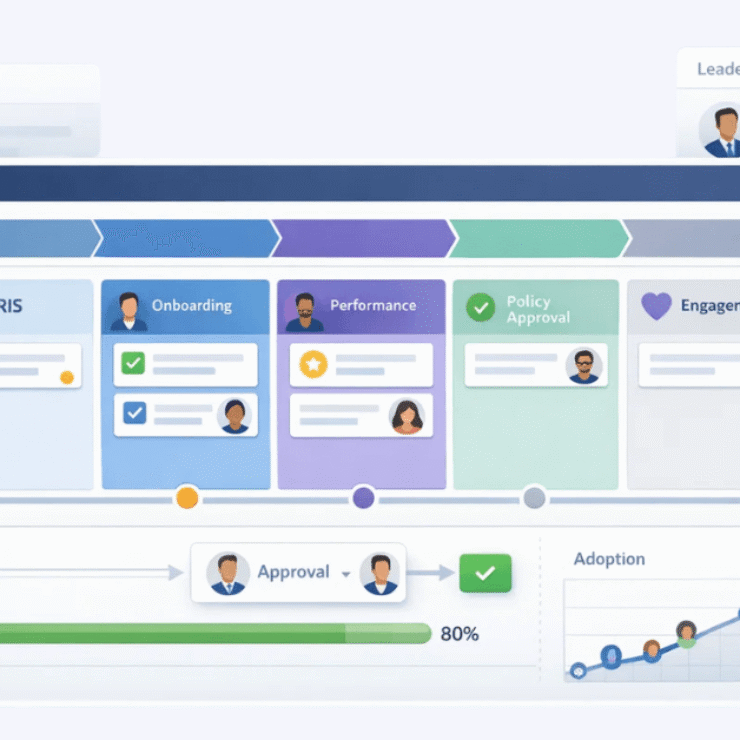
Every project—whether you’re building a website, launching a product, or rolling out new software—follows the same five phases. Think of them as a roadmap: you don’t always need a giant binder of processes, but you do need to know where you are and what comes next.
Initiation
This is where you set the foundation. The goal is simple: Why are we doing this project, and what does success look like?
- Define the problem or opportunity.
- Write a short business case (it doesn’t need to be 20 pages—one page works).
- Identify the sponsor and high-level risks.
Pro tip: If you can’t explain in two sentences why the project matters, it’s not ready to start.
Planning
Here’s where you put meat on the bones. Good planning saves hours later.
- Break down deliverables into a Work Breakdown Structure (WBS).
- Estimate time and costs (try three-point estimation: best case, worst case, most likely).
- Assign responsibilities (RACI is your friend here).
- Build a risk register and a communication plan.
- Lock down a baseline schedule and budget.
Pro tip: Always set entry and exit criteria for deliverables. If you don’t know what “done” looks like, you’ll never finish.
Execution
This is where plans turn into action. The team starts doing the work.
- Assign and track tasks.
- Run regular check-ins (daily stand-ups or weekly status meetings depending on project size).
- Manage vendors, resources, and changes.
- Keep stakeholders engaged.
Pro tip: Keep meetings short, focused, and consistent. A 15-minute daily stand-up can prevent weeks of confusion.
Monitoring & Controlling
Execution without control is chaos. This phase runs alongside execution.
- Compare actual progress to your baseline plan.
- Track scope, schedule, cost, and risks.
- Approve or reject change requests.
- Use simple dashboards to report status.
Pro tip: A red/amber/green traffic-light dashboard is far more effective than a 50-line spreadsheet. Leaders want clarity, not detail overload.
Closing
Don’t just stop when the work is done—close it properly.
- Get formal sign-off from the sponsor.
- Document lessons learned (what worked, what didn’t).
- Hand over deliverables to operations.
- Celebrate the team’s effort (even small wins matter for morale).
Pro tip: A short “after-action review” is gold. Capture lessons while they’re fresh, you’ll thank yourself on the next project.
Actionable takeaway: At any point in your project, ask yourself “Which phase am I in?” If you can’t answer that, you may already be off track.
Delivery Approaches: Predictive, Agile, and Hybrid
Not every project should be managed the same way. One of the biggest mistakes I see new project managers make is forcing every project into the same mold. The truth is, your delivery approach should match your project’s complexity, volatility, and stakeholder expectations. Let’s break it down.
Predictive (Waterfall)
This is the “classic” approach—plan everything up front, then execute step by step. It’s called waterfall because each phase flows into the next.
- Best for: Construction, manufacturing, compliance-heavy projects, or anything with fixed requirements.
- Strengths: Clarity, detailed documentation, easier to track costs and schedules.
- Weaknesses: Inflexible—if requirements change midstream, it’s expensive and messy.
👉 Pro tip: If your project has regulatory approval gates (e.g., healthcare or finance), predictive is your safest bet.
Agile
Agile flips the script. Instead of locking the plan up front, you deliver in small, iterative increments and adjust based on feedback.
- Best for: Software development, product launches, or projects with evolving requirements.
- Strengths: Flexibility, faster value delivery, better stakeholder engagement.
- Weaknesses: Can feel chaotic if stakeholders expect rigid plans; requires cultural buy-in.
👉 Pro tip: Agile isn’t “no planning”—it’s continuous planning. The backlog becomes your scope, and sprint reviews keep everyone honest.
Hybrid
Here’s the reality: most real-world projects don’t fit neatly into one box. Hybrid combines the structure of predictive with the flexibility of agile.
- Best for: Large, complex initiatives with both fixed and evolving elements. Example: rolling out enterprise software where infrastructure setup follows predictive, while feature development runs agile.
- Strengths: Balance—stakeholders get the comfort of plans plus the adaptability of iterations.
- Weaknesses: Can be tricky to manage if you don’t clearly define which parts are predictive and which parts are agile.
👉 Pro tip: Use predictive for the “hard” pieces (infrastructure, compliance) and agile for the “soft” pieces (features, UX, enhancements). Map this upfront so stakeholders don’t get confused.
Roles & Responsibilities
Even the best project plans fail if no one knows who’s doing what. A clear breakdown of roles removes confusion, prevents duplication, and builds accountability. Over the years, I’ve seen more conflict caused by unclear roles than by missed deadlines. Let’s look at the key players:
Project Sponsor
- Usually a senior leader or executive.
- Provides funding, authority, and organizational support.
- Champions the project’s value at the leadership level.
👉 Pro tip: If you don’t have an engaged sponsor, your project is at risk before it even begins.
Project Manager (PM)
- The orchestrator—the one who connects the dots between teams, tasks, and outcomes.
- Responsible for planning, monitoring, and ensuring delivery within scope, time, cost, and quality.
- Acts as the main communicator between stakeholders and the team.
👉 Pro tip: A PM doesn’t need to know how to do everyone’s job—they need to know how to make sure everyone’s job gets done.
Business Analyst / Product Owner (depending on approach)
- Translates business needs into requirements or backlog items.
- Works with stakeholders to prioritize what really matters.
- Ensures the solution aligns with the problem the business is trying to solve.
👉 Pro tip: A strong BA or PO reduces rework by 50%—they’re the bridge between “what the business wants” and “what the team builds.”
Team Members (Developers, Designers, Engineers, QA, SMEs)
- The doers—the experts who actually create deliverables.
- Bring technical expertise to complete project tasks.
- Provide estimates, flag risks, and ensure quality in their areas.
👉 Pro tip: Treat team members as partners, not resources. Their insights often save projects from disaster.
Functional / Technical Leads
- Guide their respective domains (engineering, QA, design, operations).
- Ensure standards and best practices are followed.
- Support the PM in task allocation and mentoring juniors.
👉 Pro tip: In large projects, lean on leads for day-to-day task clarity so you don’t become a bottleneck.
Stakeholders
- Anyone impacted by or interested in the project’s outcome—customers, end-users, managers, regulators.
- Provide feedback and validate deliverables.
- Can influence success through support or resistance.
👉 Pro tip: Not all stakeholders are equal—map them by influence and interest. Focus your communication on those who matter most.
Vendors / External Partners (if applicable)
- Provide third-party services, products, or expertise.
- Need clear contracts, deliverables, and accountability.
👉 Pro tip: Always build vendor milestones into your schedule—external delays can derail your internal progress.
The RACI Matrix: Your Best Friend
To avoid confusion, use a RACI matrix:
- Responsible: Who does the work.
- Accountable: Who owns the outcome.
- Consulted: Who gives input.
- Informed: Who gets updates.
👉 Actionable takeaway: Before execution begins, map major activities (requirements, testing, approvals) to a RACI chart and share it. This one exercise prevents 90% of role-related misunderstandings.
Planning Toolkit for Beginners
When you’re new to project management, it’s tempting to overcomplicate planning with too many tools. The truth? A handful of simple, well-chosen tools will cover 80% of your needs.
Work Breakdown Structure (WBS): Break the project into smaller chunks so nothing gets missed. Don’t aim for perfection—three or four levels deep is usually enough.
Pro tip: Start with sticky notes or a whiteboard. If you can explain it without jargon, you’re on the right track.
Schedule: A list of due dates isn’t a schedule. Use dependencies to see which tasks affect others. Even a simple Gantt chart can highlight bottlenecks.
Pro tip: Identify your “critical path”—the sequence of tasks that determines the overall finish date.
Estimates: Use three-point estimating: best case, worst case, and most likely. It’s a simple way to build realism into your plan.
Pro tip: Ask team members for input—they often know where the hidden time sinks are.
Risk Register: Don’t wait for issues to explode. Write down risks early, score them (likelihood × impact), and plan a response.
Pro tip: Even a basic Excel sheet with five columns (risk, impact, likelihood, owner, response) is enough to start.
Communication Plan: Projects fail more from silence than from mistakes. List who needs updates, how often, and in what format.
Pro tip: Ask stakeholders how they want updates, some want weekly dashboards, others prefer a quick call.
Metrics & Dashboards (What to Track and How Often)
Without metrics, you’re flying blind. Without dashboards, stakeholders won’t trust your progress. The trick is to track enough to show control, but not so much that you drown in data.
- Leading Indicators (look forward):
- % tasks completed on time
- Risk exposure trend
- Requirement churn rate
- Lagging Indicators (look backward):
- Schedule variance (planned vs. actual finish)
- Budget variance (planned vs. actual cost)
- Defect leakage (issues found after release)
- Update Cadence:
- Daily → Team boards (Kanban, task boards).
- Weekly → Status reports for the team and key stakeholders.
- Monthly → Steering committee or executive dashboard.
👉 Pro tip: Stick to five key metrics. Any more, and people stop paying attention. In one of my projects, a simple “on-time task completion %” told us more about delivery health than 20 other charts combined.
30-60-90 Day Plan to Learn the Basics
If you’re new to project management, don’t try to swallow everything at once. Break your learning into stages.
- Day 0–30: Learn the language.
- Get familiar with core terms (scope, baseline, risk, stakeholder).
- Try running a mini-project at work or even at home (organizing an event).
- Build your first one-page charter.
- Day 31–60: Apply the basics.
- Lead a small project with a real team.
- Track risks weekly and create a simple dashboard.
- Run your first lessons-learned meeting at the end.
- Day 61–90: Level up.
- Take on a bigger project or part of a program.
- Handle a real change request using a simple change log.
- Start mentoring a peer or documenting your own PM “playbook.”
👉 Pro tip: Don’t wait for permission—practice project management on everyday work. Even planning a team offsite can teach you scope, budget, and risk.
Common Mistakes (and Simple Fixes)
Even experienced project managers fall into traps. Here are the most common ones I see, and how to avoid them:
Skipping risk reviews → Risks quietly turn into issues.
✅ Fix: Hold a 15-minute weekly risk review—no slides, just a quick discussion.
Using a calendar as a plan → Dates don’t show dependencies.
✅ Fix: Build at least a simple dependency map or Gantt view.
Avoiding change control → Every “small tweak” adds up until your project scope explodes.
✅ Fix: Use a one-line change log. Note what changed, who approved it, and why.
Overloading dashboards → 20 metrics no one reads.
✅ Fix: Track only the five that matter most.
Ignoring stakeholders → Deliverables land, but no one feels ownership.
✅ Fix: Engage stakeholders early and tailor communications to their style.
Actionable takeaway: Don’t aim to be perfect. Aim to be consistent. Small, steady improvements in risk management, planning, and communication pay off more than grand fixes.
Final Thoughts
Project management often sounds intimidating, but at its heart it’s just about creating clarity, trust, and accountability. Get the basics right—know your scope, set a realistic plan, keep communication open—and you’ll already be ahead of most teams.
In my experience, the projects that succeed aren’t the ones with the flashiest tools or the thickest binders of documentation. They’re the ones where people know what they’re aiming for, feel supported, and trust the process.
👉 If you’re just starting out, keep it simple:
- Write down the goal in one sentence.
- Break it into clear deliverables.
- Track progress with a basic checklist or dashboard.
- Talk to your team and stakeholders regularly.
Small, consistent steps build momentum. Over time, those basics turn into habits—and those habits turn into projects that finish strong, build confidence, and open doors for bigger opportunities.
FAQs
What are the basics of project management?
At its simplest, project management is about balancing six things: scope, time, cost, quality, risk, and stakeholders. Think of them as the levers you’re constantly adjusting. If you pull one (say, extend the scope), the others move too (more time, more cost). The basics are about keeping those levers in harmony so the project crosses the finish line without burning out your team or blowing up the budget.
What are the 5 phases of project management?
Every project—big or small—follows the same five phases: Initiation, Planning, Execution, Monitoring & Controlling, and Closing.
- Initiation → Define the “why” and what success looks like.
- Planning → Break it into tasks, timelines, roles, and risks.
- Execution → Get the work done.
- Monitoring & Controlling → Keep an eye on scope, time, and costs while fixing issues early.
- Closing → Wrap it up, get sign-off, capture lessons, and celebrate the win.
Even if you don’t use all the PM jargon, these five steps give you a natural rhythm to follow.
Which methodology should I start with?
Don’t overthink it. Start with the basics first—clarity in scope, schedule, and roles. Once you’re comfortable, choose a delivery style:
- If your project is predictable (like setting up office infrastructure), use Predictive/Waterfall.
- If it’s uncertain or evolving (like building a new app), Agile makes sense.
- Most real-world projects fall somewhere in between, so a Hybrid approach is practical.
Bottom line: the method is less important than consistently applying the fundamentals.
Can small teams benefit from project management?
Absolutely—project management matters more when resources are tight. A 4-person startup launching a product needs structure just as much (if not more) than a 400-person enterprise. Even lightweight practices—like writing a one-page project charter or running a weekly check-in—can save small teams from chaos. Project management isn’t about bureaucracy; it’s about giving everyone clarity so they can focus on the work.