
Introduction
HR teams today run more projects than they often realize.
Hiring drives. HRIS rollouts. Policy updates. Engagement programs. Performance cycles. Compliance initiatives. L&D launches. Culture transformations.
Each of these has a start date, an end date, stakeholders, dependencies, and risks.
That’s a project — whether it’s labeled that way or not.
The challenge? Most HR teams are expected to deliver these projects on top of day-to-day operations, often without a clear framework, ownership model, or execution rhythm. That’s where HR project management comes in.
This guide isn’t about turning HR into a PMO. It’s about giving HR teams just enough structure to deliver work predictably, without adding bureaucracy.
What is HR Project Management?
HR Project Management is the structured way HR teams plan, execute, and deliver people-related initiatives that have a clear start, a defined outcome, and multiple stakeholders involved.
In simple terms: HR Project Management is how HR turns intent into execution.
Unlike day-to-day HR operations (payroll, attendance, employee queries), HR projects are temporary, outcome-driven efforts that require coordination across teams, timelines, and decisions.
Examples include:
- Implementing a new HRIS or payroll system
- Redesigning onboarding or performance management
- Rolling out a policy or compliance initiative
- Leading a DEI, engagement, or culture program
- Managing large-scale hiring or workforce restructuring
Each of these has:
- A deadline
- Dependencies on IT, Finance, Legal, or leadership
- Change impact on managers and employees
- Risk if execution slips
That’s where project management becomes essential.

How HR Project Management Is Different from Traditional Project Management
This is where many guides get it wrong.
Traditional project management focuses on:
- Scope
- Timelines
- Deliverables
HR project management must also handle:
- Change
- Behavior
- Adoption
- Communication
You’re not just delivering a system or policy. You’re asking people to work differently.
That makes HR projects more complex than they appear on paper.
From experience, an HR project can be “on time” and still fail—if managers don’t use it, employees don’t trust it, or leadership stops reinforcing it.
So success in HR project management isn’t just: “Did we launch?”
It’s: “Did people actually adopt it, and does it work in real life?”
Core Elements of HR Project Management
If HR project management feels overwhelming, it’s usually because too many things are unclear at the same time.
In reality, most successful HR projects consistently get five things right. When even one of these is missing, execution starts to wobble.
Let’s break them down properly.
1. Clear Outcomes (Not Just Activity)
Most HR projects begin with good intentions:
- “We need to improve onboarding.”
- “Let’s implement a new HR system.”
- “We should launch an engagement initiative.”
But intentions aren’t outcomes.
A strong HR project starts with clarity around:
- What specific problem are we solving?
- What will be different once this is complete?
- How will we measure success?
For example:
❌ Weak outcome: “Launch a new performance management process.”
✅ Strong outcome: “Increase performance review completion rates to 95% and improve manager feedback quality scores by 20%.”
Without outcome clarity:
- Tasks multiply.
- Scope drifts.
- Priorities blur.
With outcome clarity:
- Decisions become easier.
- Trade-offs are clearer.
- Leadership alignment improves.
If the team cannot explain success in one sentence, the project isn’t ready yet.
2. Defined Ownership (No Shared Accountability Fog)
This is where most HR projects quietly fail.
When ownership is vague, people assume:
- “Someone else is handling it.”
- “I thought that was IT’s responsibility.”
- “Wasn’t Finance approving that?”
Clear HR project management defines:
- One project owner (accountable for delivery)
- One sponsor (removes escalations and blockers)
- Clear contributors (who executes what)
- Explicit approvers (who signs off and when)
A simple rule: If more than one person is “fully responsible,” no one is.
Defined ownership prevents:
- Delayed approvals
- Endless follow-ups
- Blame after setbacks
It also builds confidence — especially in cross-functional projects.
3. Structured Execution (Visible Progress, Not Heroics)
Structure doesn’t mean bureaucracy.
It means:
- Defined milestones
- Clear deadlines
- Known dependencies
- A regular check-in rhythm
Without structure:
- Work gets reactive.
- Updates happen only when asked.
- Risk appears late.
With structure:
- Progress becomes visible.
- Blockers surface early.
- Leadership stops chasing status.
For HR teams balancing operations and projects, this structure reduces cognitive load. It moves execution from “remembering” to “seeing.”
Even a simple weekly 30-minute check-in can change project trajectory dramatically.
4. Stakeholder Coordination (Especially Cross-Functional)
HR projects almost never exist in isolation.
HRIS rollout? IT involvement.
Policy change? Legal sign-off.
Hiring surge? Finance budget alignment.
Engagement program? Leadership reinforcement.
If stakeholder alignment is not mapped early:
- Approvals stall.
- Expectations misalign.
- Launch dates slip.
Good HR project management defines:
- Who needs to be consulted?
- Who needs to approve?
- Who needs to be informed?
- When communication should happen?
Stakeholder clarity reduces friction before it shows up.
Remember: Most HR project delays happen at approval points — not execution points.
5. Change & Adoption Planning (The Often-Ignored Element)
This is what makes HR project management fundamentally different from traditional PM.
You’re not just delivering a system or document. You’re asking people to change behavior.
McKinsey research shows that 70% of change programs fail to achieve their goals, largely due to employee resistance and lack of management support.
That’s why adoption planning is not optional in HR projects — it is central.
Without adoption planning:
- Managers ignore the new system.
- Employees bypass the process.
- Leadership loses interest after launch.
Change planning includes:
- Clear communication before launch
- Training or enablement
- Reinforcement from leadership
- Feedback loops after go-live
- Measuring adoption metrics
An HR project can launch on time and still fail if people don’t use it.
Success is not: “We launched.”
Success is: “It’s being used consistently.”
Prosci’s research shows that projects with excellent change management are 7 times more likely to meet or exceed objectives than those with poor change management.
For HR teams, that difference is often the gap between rollout and real adoption.
6. Risk Awareness (Especially Adoption & Dependency Risks)
Many HR teams track timeline risk. Fewer track behavioral risk.
Examples of HR-specific risks:
- Managers resisting new processes
- Data quality issues during migration
- Approval bottlenecks
- Competing business priorities
- Lack of executive reinforcement
Effective HR project management doesn’t eliminate risk — it surfaces it early.
A simple question during weekly reviews: “What could derail this in the next two weeks?”
That one question prevents surprises.
When These Elements Work Together
When you combine:
- Clear outcomes
- Defined ownership
- Structured execution
- Stakeholder alignment
- Adoption planning
- Risk awareness
HR projects stop feeling chaotic.
Instead of: “Who’s handling this?”
You hear: “Here’s where we are. Here’s what’s blocked. Here’s what we need.”
That shift — from reactive to predictable — is what HR project management is really about.
And it doesn’t require heavy frameworks.
It requires clarity.
A Practical Way to Think About HR Project Management
A helpful mental model is this:
- Operations keep the organization running
- Projects move the organization forward
HR Project Management is what allows HR to:
- Move faster without chaos
- Scale initiatives without burnout
- Deliver consistent outcomes across teams
- Reduce reliance on follow-ups and heroics
It replaces “chasing people” with clear systems and visibility.
When HR Project Management Becomes Critical
HR teams especially need project management when:
- Work becomes cross-functional (HR + IT + Finance + Legal)
- Initiatives affect managers and employees at scale
- Timelines are fixed (compliance, audits, go-lives)
- Leadership expects measurable outcomes
At that point, spreadsheets, email threads, and memory no longer scale.
Why This Matters Now More Than Ever
HR today is expected to be:
- Strategic
- Data-informed
- Fast-moving
- Accountable for outcomes
That’s not possible without strong execution.
According to PMI’s Report, organizations that use standardized project management practices waste 28 times less money than those with low maturity.
For HR teams, that difference often shows up in delayed rollouts, rework, and poor adoption — not just budget numbers.
HR Project Management is what bridges the gap between: “This is what we want to do” and “This is what actually changed on the ground.”
Why HR Teams Need Project Management Now
HR work has changed.
What used to be internal and linear is now:
- Cross-functional (HR + IT + Finance + Legal)
- Time-bound
- Highly visible to leadership
- Tied directly to business outcomes
And yet, many HR projects still rely on informal coordination, emails, and follow-ups.
From 20+ years working with HR and cross-functional teams: Most HR projects don’t fail because of poor intent or effort. They fail because ownership is unclear and execution depends on people “remembering” instead of systems. As HR work becomes more cross-functional, informal coordination stops scaling.
Without structure:
- Decisions get delayed
- Ownership gets fuzzy
- Reporting becomes reactive
- Adoption suffers after launch
Project management gives HR teams a shared execution language — without turning work into red tape.
Common HR Project Types (with real examples)
Almost every HR initiative fits into one of these buckets:
People lifecycle projects
- Hiring drives
- Onboarding redesign
- Performance management cycles
- Succession planning
Systems & process projects
- HRIS or ATS implementation
- Payroll or benefits changes
- Policy digitization
- Workflow automation
Culture & change projects
- Engagement programs
- DEI initiatives
- Leadership development
- Change communication programs
Compliance projects
- Audits
- Mandatory training rollouts
- Policy updates
- Regulatory changes
Real-world pattern: HRIS implementations are among the most common HR projects that struggle — not because of the technology, but because data ownership, approvals, and post-launch adoption are rarely defined upfront.
The project doesn’t fail at go-live. It fails in the first 60 days after.
A Simple HR Project Management Framework (6 Phases)
You don’t need complex methodologies. You need clarity.
Here’s a lightweight, HR-friendly framework that works consistently:
- Intake & approval
- Scope & success metrics
- Plan & resource
- Execute & communicate
- Monitor & control
- Close & learn
Hard-earned insight: Simpler frameworks consistently outperform complex ones in HR. HR teams succeed when the process is easy to explain and easy to follow — not when it mirrors heavy PMO models.
Let’s walk through how this actually looks.
Step-by-Step: How to Run an HR Project
Step 1: Define outcomes (not tasks)
Before listing tasks, answer:
- What problem are we solving?
- How will we know this worked?
Bad outcome: “Roll out new onboarding program”
Good outcome: “Reduce time-to-productivity for new hires by 20%”
If the outcome isn’t clear, execution will drift.
Step 2: Create a one-page HR project charter
You don’t need a deck. You need clarity.
At minimum, capture:
- Project goal
- Scope (what’s in / out)
- Sponsor
- Owner
- Timeline
- Key risks
- Success metrics
If this can’t fit on one page, the project isn’t ready.
Step 3: Map stakeholders and approvals early
Most HR delays happen here.
Be explicit about:
- Who owns delivery
- Who approves decisions
- Who needs to be consulted
- Who just needs to be informed
If approvals are unclear, execution will slow — guaranteed.
Step 4: Plan the work (only what matters)
Focus on three things:
- Major milestones
- Dependencies
- Owners
Avoid over-engineering. HR projects don’t fail because task lists are too short — they fail because dependencies are invisible.
Step 5: Create a simple execution rhythm
For most HR projects:
- Weekly 30-minute check-in
- Agenda:
- What moved?
- What’s blocked?
- What decisions are needed?
Keep it boring. Consistency beats intensity.
Step 6: Close the project properly
Closure matters.
Always capture:
- What was delivered
- Adoption status
- Open items
- Learnings for the next project
Projects without closure tend to resurface as problems later.
Top 5 HR Project Management Tools (2026)
When HR projects grow beyond email threads and spreadsheets, the right tool makes a measurable difference. The goal isn’t feature overload — it’s clarity, ownership, and visibility.
Here are five tools that consistently work well for HR teams:
1. Karya Keeper
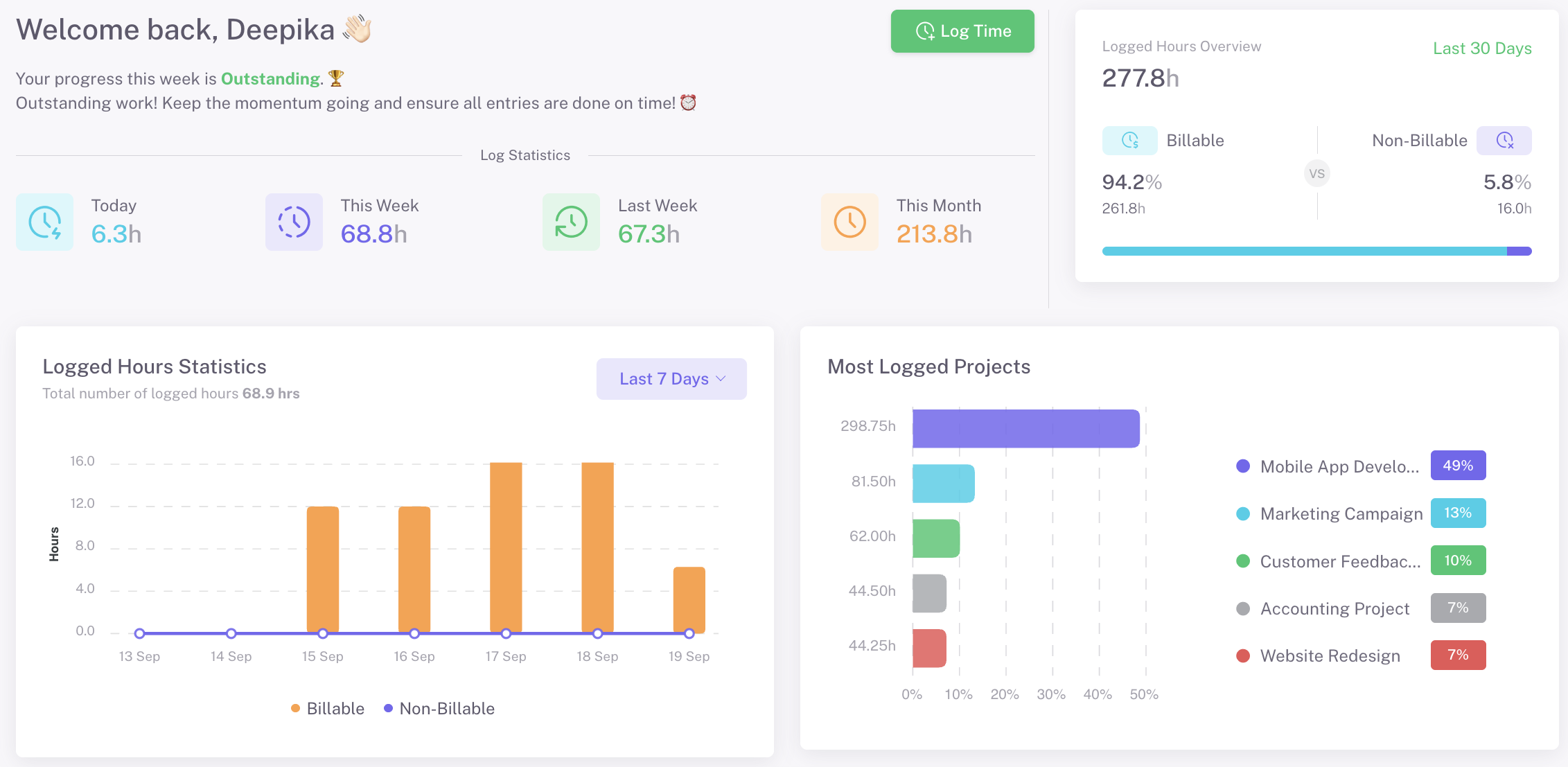
Best for: Role-based visibility and structured HR execution
Karya Keeper helps HR leaders, managers, and contributors see only what matters to them. Strong for cross-functional initiatives like HRIS rollouts, policy implementations, and engagement programs.
2. monday.com
Best for: Visual workflow coordination
Great for HR teams that manage multiple parallel initiatives and want clear status tracking with automation support.
3. ClickUp
Best for: All-in-one flexibility
Useful when HR wants tasks, documentation, goals, and dashboards in one place — especially for growing teams.
4. Asana
Best for: Clean, lightweight task management
Simple to adopt and works well for recurring HR cycles like performance reviews and hiring coordination.
If you’re evaluating Asana more deeply or comparing it with other options, we’ve broken down the best Asana alternatives in 2026 with detailed pros, cons, and use-case comparisons.
5. Smartsheet
Best for: Structured planning and governance
Ideal for compliance-heavy or reporting-driven HR projects that require milestone tracking and executive dashboards.
If your tool makes it harder to answer “what’s blocked right now?” or “who owns this?”, it’s adding friction — not removing it.
The best HR project management software is the one your team actually updates consistently.
HR Project KPIs: How to Prove Impact
Measure outcomes, not activity.
Examples:
- Hiring projects → time-to-fill, offer acceptance
- Onboarding → time-to-productivity, completion rate
- HRIS rollout → adoption rate, support tickets trend
- Engagement initiatives → participation, retention proxies
If you can’t explain impact in plain language, leadership won’t trust the work.
Common Mistakes in HR Project Management
These come up again and again.
- Treating HR projects as “side work”
- No clear owner
- Over-communication, low clarity
- Tool-first decisions
- No adoption plan
A mistake we see repeatedly: Teams consider HR projects “done” at rollout. In reality, success depends on adoption. Training, communication, and reinforcement in the first 60–90 days matter more than the launch date itself.
HR Project Roles: Who Does What?
You don’t always need a dedicated HR project manager.
But you do need:
- A clear project owner
- A sponsor who removes blockers
- Contributors who know their role
- One source of truth for progress
When projects grow large or high-risk, assigning a dedicated owner becomes non-negotiable.
HR Project Management Software: What to Look For
Forget feature lists. Focus on:
- Role-based visibility
- Clear ownership
- Approval workflows
- Simple reporting for leadership
- Easy adoption for non-technical users
If the tool adds friction, people will bypass it.
How to Choose the Right Approach (Quick Guide)
- Compliance-heavy projects → structured plans + approvals
- Change-heavy projects → communication + adoption metrics
- Cross-functional projects → dependency mapping first
Switching to Better HR Project Management (Without Disruption)
Don’t overhaul everything.
Start with:
- One high-impact HR project
- A simple framework
- Clear ownership
- Weekly rhythm
Prove value. Then scale.
Final Thoughts
After 20+ years of watching HR teams adopt — and abandon — project approaches, one truth remains:
The best HR project management system is the one people actually use.
Clarity beats complexity.
Outcomes beat activity.
Adoption beats perfection.
If HR projects consistently deliver outcomes without chaos, trust follows — and so does impact.
FAQs
Common HR projects include:
- HRIS or ATS implementation
- Onboarding process redesign
- Performance management cycle rollout
- Compliance and audit preparation
- Large-scale hiring initiatives
- Employee engagement programs
- DEI strategy implementation
- Policy updates or digitization
Any HR initiative with a defined start, end, and outcome qualifies as a project.
An HR project manager ensures HR initiatives are delivered on time and adopted successfully. Their responsibilities typically include:
- Defining project scope and success metrics
- Coordinating stakeholders (HR, IT, Finance, Legal)
- Managing timelines and dependencies
- Tracking risks and adoption
- Reporting progress to leadership
In smaller organizations, this role may be handled by an HR Business Partner or HR Operations Lead rather than a dedicated project manager.
Traditional project management focuses on scope, timelines, and deliverables. HR project management must also address:
- Change management
- Behavioral adoption
- Communication planning
- Employee and manager buy-in
An HR project can launch on time and still fail if people do not adopt it.
HR projects most commonly fail due to:
- Unclear ownership
- Weak stakeholder alignment
- Lack of adoption planning
- Poor communication
- Treating the project as “side work”
- Measuring completion instead of impact
Most failures happen after launch, during the first 60–90 days of adoption.